304 Stainless Steel Flange Nylon Anti Loosening Locking Nut M3 M4 M5 M6 M8 M10 M12 M16 Hexagonal Edge Length 7-55mm Vibration-Resistant Fastener


304 Stainless Steel Flange Nylon Anti Loosening Locking Nut M3 M4 M5 M6 M8 M10 M12 M16 Hexagonal Edge Length 7-55mm Vibration-Resistant Fastener
304 Stainless Steel Flange Nylon Locking Nut for Vibration-Resistant Fastening M3 to M16
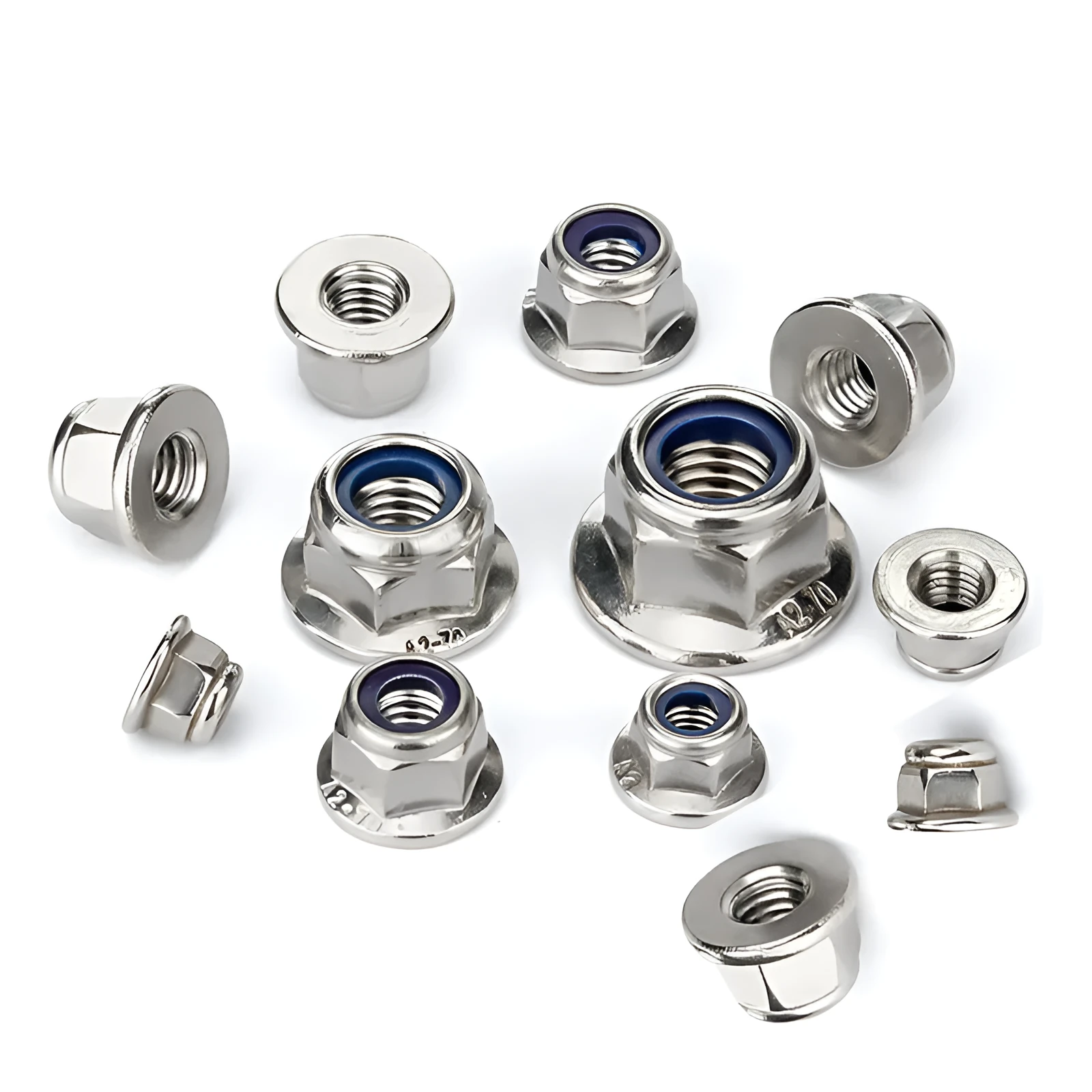
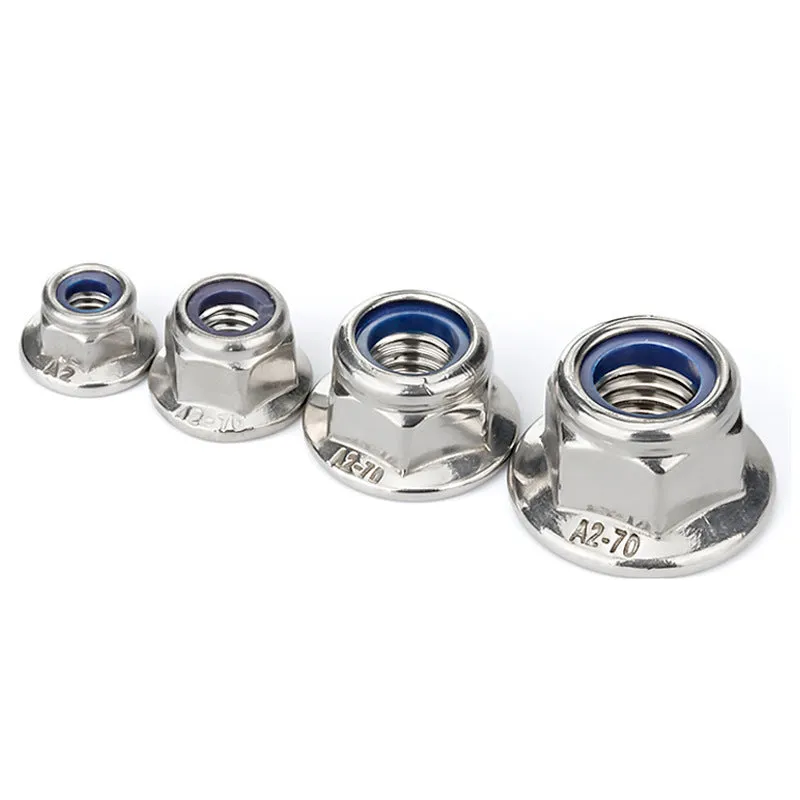
When a standard fastener loosens under vibration, it can lead to equipment downtime, safety risks, and repeated re-tightening. This flange nylon locking nut addresses that problem directly with an integrated locking mechanism that does not rely on separate washers or chemical adhesives. Made from 304 stainless steel, it suits both indoor and outdoor environments where corrosion resistance matters. Available in a wide range of thread sizes from M3 to M16, it covers many common bolt diameters used in machinery, automotive assembly, furniture construction, and general engineering.
Features and Construction

The design combines a flange base with a nylon insert that creates friction against the bolt threads. This section covers the material choices and dimensional options available.
Material and Build
Each nut is formed from 304 stainless steel, a widely used alloy that offers good resistance to rust and oxidation in most settings. The flange base is integral to the nut, eliminating any need for a separate washer. The nylon ring is embedded in the top or centre of the nut, and it deforms elastically when the nut is threaded onto a bolt, providing a consistent locking force that resists loosening from vibration or shock.
Size and Practical Fit
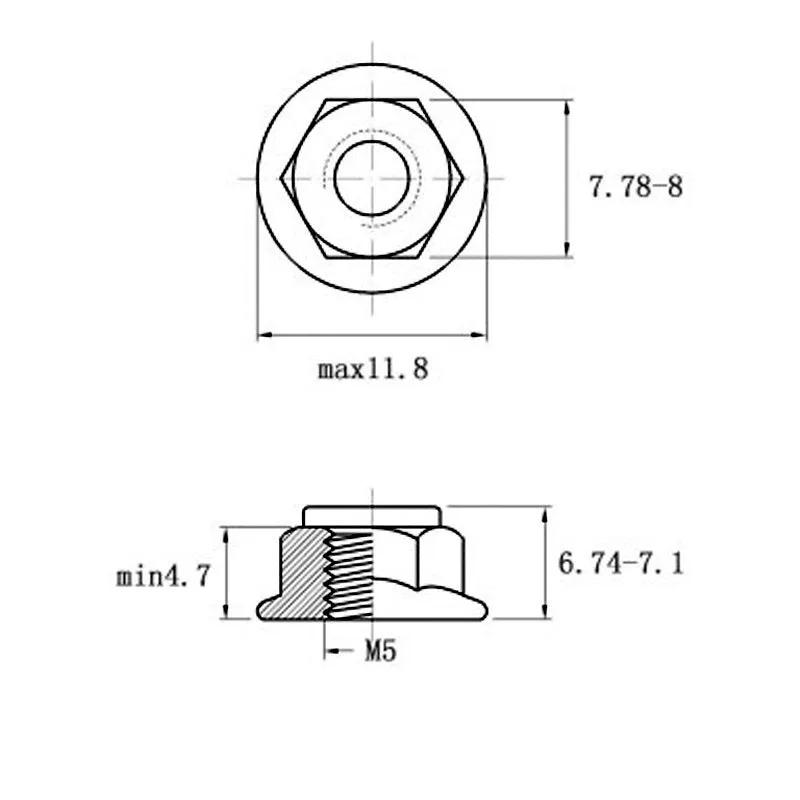
The nut is available in thread sizes M3, M4, M5, M6, M8, M10, M12, and M16. Each size corresponds to a specific hexagonal edge length: 7mm (M3), 8mm (M4), 10mm (M5), 13mm (M6), 15mm (M8), 18mm (M10), 24mm (M12), and 55mm (M16). These dimensions allow the user to select the correct nut for their bolt size and to use standard wrenches or sockets for installation and removal.
Uses and Placement
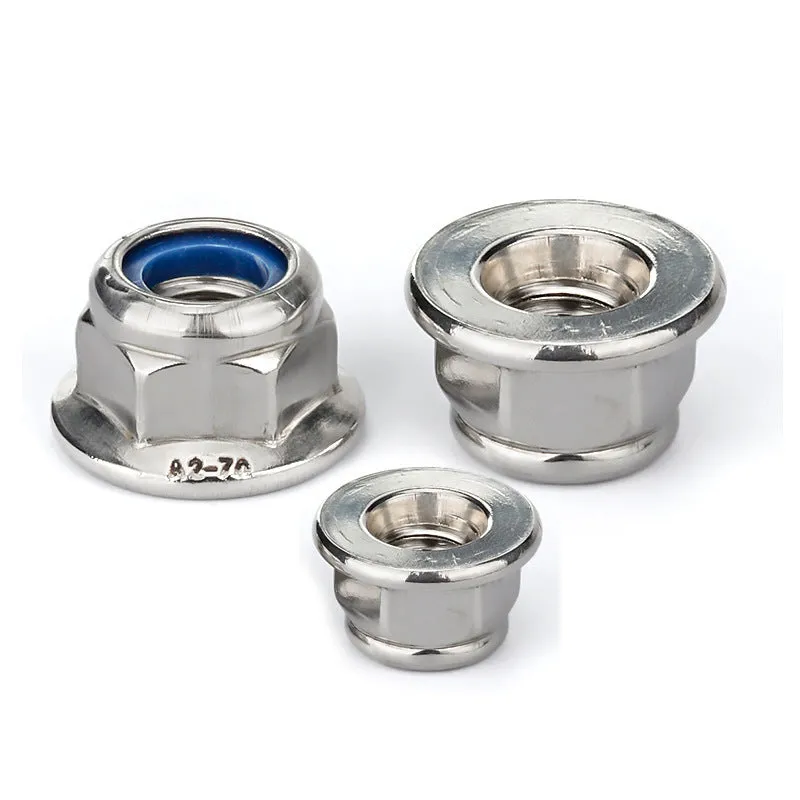
Because the nut's primary function is to resist loosening, it is suitable wherever vibration or movement might otherwise cause a standard nut to back off. The flange base adds load distribution and can reduce surface marking.
Mechanical and Industrial Use
In machinery, pumps, conveyors, and power tools, vibration is a constant factor. Replacing standard nuts with this flange nylon locking nut reduces the need for periodic retightening and lowers the risk of components separating during operation. The 304 stainless steel construction also helps in environments where moisture or mild chemicals are present.
Automotive and Construction Use
On vehicles, the nut can be used on suspension components, engine mounts, and body panels where movement and vibration occur. In construction, it is useful for securing brackets, handrails, or temporary structures that must remain tight even when subject to wind or mechanical disturbance.
Household and General Assembly
For furniture assembly, garden equipment, or DIY projects, the nut provides an easy way to create a more secure joint without applying thread-locking liquid. The flange head also means a built-in washer effect, saving the need for separate parts.
Benefits and Buying Value
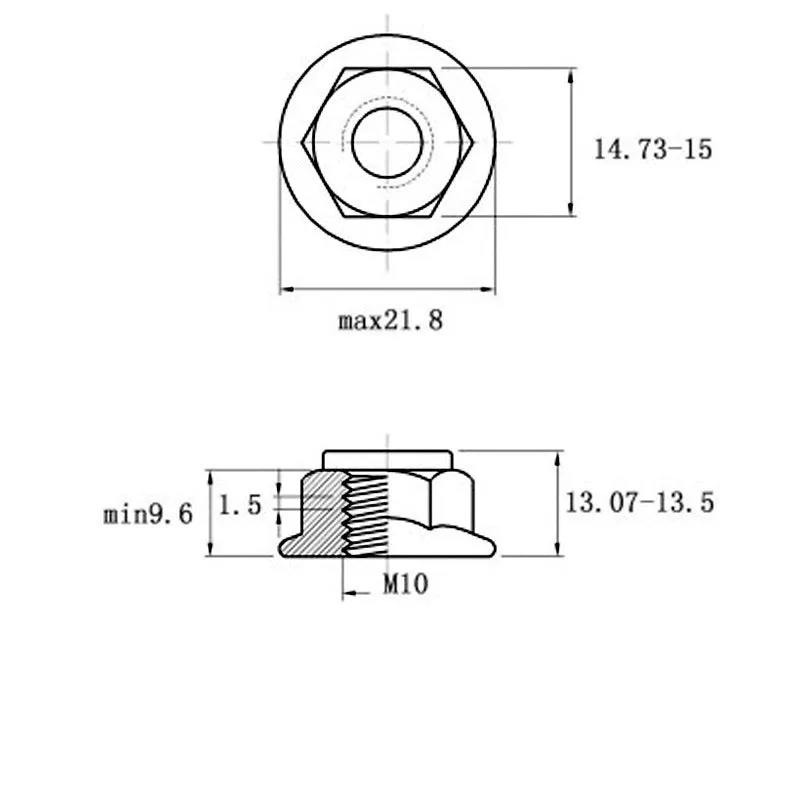
The combination of a flange base, nylon locking insert, and stainless steel material offers straightforward practical value. This section summarises the main benefits supported by the product data.
Reuse and Low Maintenance
The nylon insert is reusable: after removing the nut, the ring can recover its shape, allowing the nut to be reinstalled on the same or a different bolt. However, heavy or repeated use may eventually reduce the locking effect, so periodic inspection is recommended. No specialist tools are needed for fitting.
Why Choose This Product
This nut provides a simple, one-piece solution for anti-loosening fastening across multiple thread sizes. The 304 stainless steel material offers corrosion resistance without additional coatings. The flange base helps distribute clamping force, which can be useful when joining softer materials. For anyone needing a reliable, vibration-resistant fastener, this nut covers standard metric bolt sizes in a single package.