
Lithium Battery Charging and Protection Integrated Board 5V Input, 1000mA Charge Current, 2.6 x 1.7 cm Compact Module


Lithium Battery Charging and Protection Integrated Board 5V Input, 1000mA Charge Current, 2.6 x 1.7 cm Compact Module
Lithium battery charging and protection board with 1000mA charging control

This lithium battery charging and protection integrated board provides a simple charging path and battery protection in one compact module. It takes a 5V input, supports a maximum charging current of 1000mA, and cuts off charging at 4.2V ±1%. The board also adds over-discharge protection at 2.5V and overcurrent protection at 3A, giving clear electrical limits for single-cell lithium battery use. At 2.6 x 1.7 cm, it is small enough for compact builds where board space is tight.
Charging and protection board features
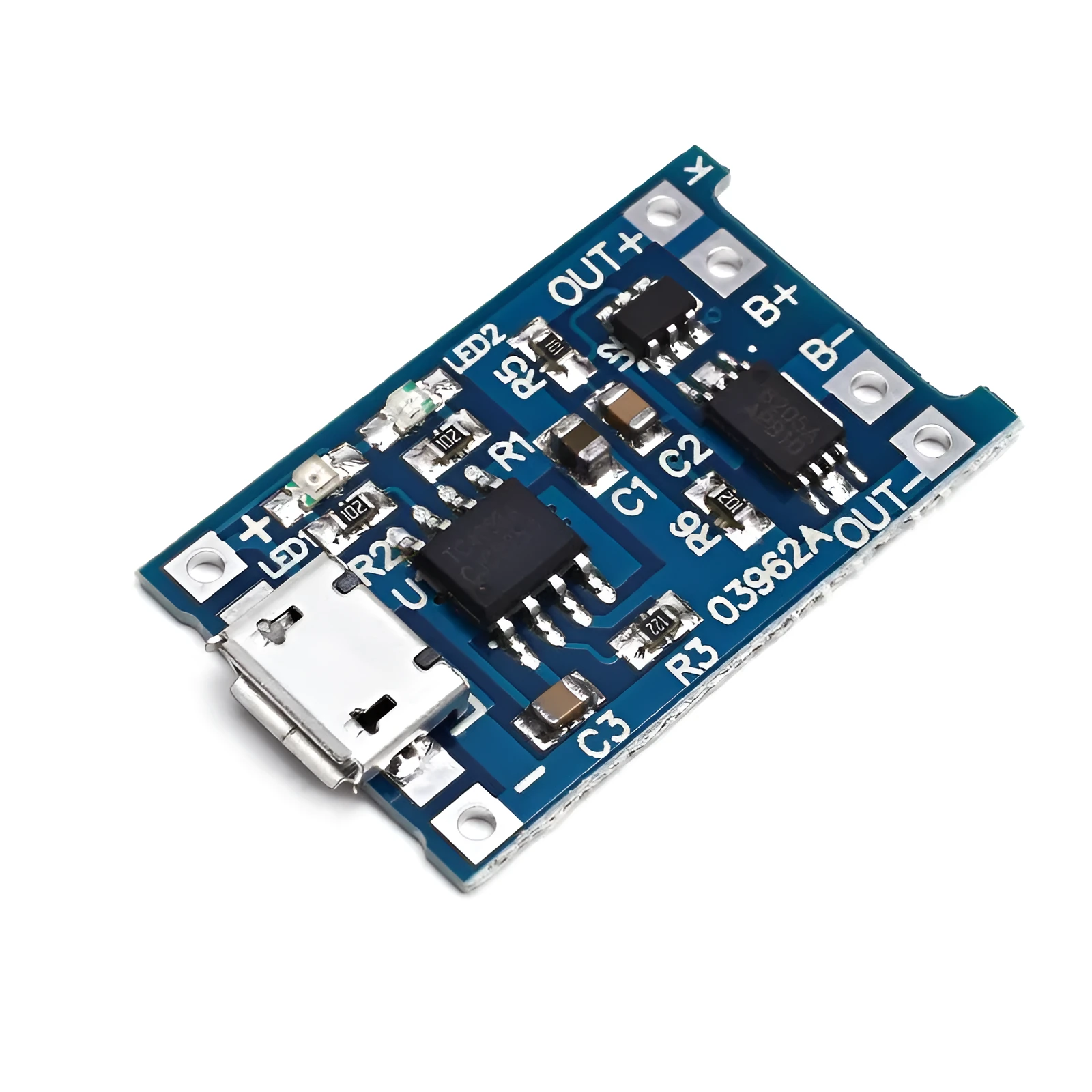
The source data gives the main operating limits without adding unnecessary detail. That makes it easier to match the module to a project that needs defined charge control and basic battery protection. With a 5V input and a 1000mA maximum charging current, the board is set up for straightforward use in small electronic assemblies. The 4.2V ±1% cut-off, 2.5V over-discharge point, and 3A overcurrent limit are the key numbers to check before installation.
Compact board design
The board measures 2.6 x 1.7 cm, which is the main physical specification available. That size suits projects where extra space is limited and a small charging module is needed. The source text lists the colour as blue, so the product is identified as a blue board variant. No other construction details are provided, so the description stays with the measurable information supplied.
Defined charging limits
The module accepts 5V input voltage and charges with a maximum current of 1000mA. Charging cut-off is specified at 4.2V ±1%, which gives a precise upper charging threshold. The battery over-discharge protection voltage is 2.5V, helping prevent the battery from dropping below the stated limit. Overcurrent protection is rated at 3A, adding another fixed safety boundary for the connected battery circuit.
Protection-focused specification
This board combines charging and protection functions in a single integrated unit. The listed values are specific: 4.2V ±1% charge cut-off, 2.5V over-discharge protection, and 3A overcurrent protection. Those figures matter when matching the board to a lithium battery project because they define the working range rather than relying on general-purpose claims. As no materials are given, only the documented electrical and size data should be used when assessing fit.
Applications for lithium battery projects

These specifications make the module relevant to compact lithium battery assemblies that need charging and protection in one board. The limited size and fixed electrical thresholds are the main points to consider. It is suited to builds where a 5V charging source is available and where the battery should be monitored with defined charge, discharge, and current limits.
Small project use
In a small electronics project, the 2.6 x 1.7 cm footprint helps reduce the space taken up by the charging circuit. The 1000mA maximum charging current and 5V input give clear conditions for selection. For builders working with compact battery-powered devices, the board offers a simple way to combine charge control and protection without adding unspecified extras.
Battery protection use
The protection values are the practical part of the specification. The 2.5V over-discharge point helps avoid running the battery too low, while the 3A overcurrent limit provides a defined threshold for the load. The 4.2V ±1% cut-off keeps charging within a stated upper limit. Those three numbers are the core reasons to choose this module for a lithium battery circuit.
Integration use
Because the charging and protection functions are built into one board, it reduces the need to source separate modules for each task. That is useful where space, wiring simplicity, or part count matters. The specification remains clear and factual: 5V input, 1000mA maximum charging current, 4.2V ±1% cut-off, 2.5V over-discharge protection, and 3A overcurrent protection.
Benefits of the charging board

The main benefit of this board is the combination of size and defined operating values. Instead of vague claims, the product gives exact thresholds that can be checked against a project requirement. That makes it easier to judge whether the board suits a particular lithium battery setup.
Measured value
The value comes from the documented limits. A 5V input and 1000mA maximum charging current provide clear charging conditions. The 4.2V ±1% cut-off, 2.5V over-discharge protection, and 3A overcurrent protection set out the board’s behaviour in use. The 2.6 x 1.7 cm size can also help when comparing it with larger modules that would take more room on a build.
Practical confidence
Clear electrical limits give practical confidence when assembling a battery-powered project. You know the charging ceiling, the discharge floor, and the current protection point from the start. That is especially helpful when the battery setup has limited space and requires a compact integrated board rather than separate charging and protection parts.
Purchase reason
If your project needs a small lithium battery charging and protection board with stated electrical limits, this module provides exactly that. The 2.6 x 1.7 cm size, 5V input, 1000mA maximum charging current, 4.2V ±1% cut-off, 2.5V over-discharge protection, and 3A overcurrent protection are all clearly listed in the source data. Those specifications make it easy to verify fit before buying.