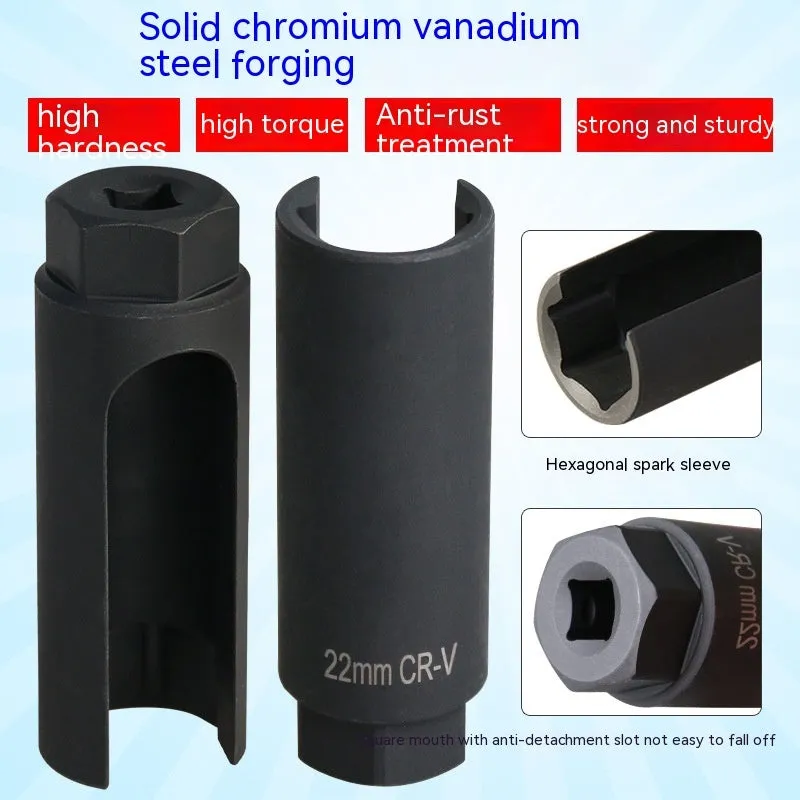
Oxygen sensor sleeve tool crafted from chromium vanadium steel for a 22mm sensor nut, offering a black finish and Japanese-style design for precise fit and corrosion resistance on automotive exhaust systems.


Oxygen sensor sleeve tool crafted from chromium vanadium steel for a 22mm sensor nut, offering a black finish and Japanese-style design for precise fit and corrosion resistance on automotive exhaust systems.
Chromium Vanadium Steel Oxygen Sensor Sleeve Tool for 22mm Automotive Nuts

This specialised tool is designed for a single, critical task in automotive repair: the removal and installation of oxygen sensors. These sensors, located in the exhaust system, often become seized due to extreme heat cycles and corrosion, making them challenging to service with standard sockets. This sleeve provides a dedicated solution, crafted from chromium vanadium steel and sized precisely for a 22mm sensor nut. Its Japanese-style design and robust construction offer mechanics and DIY enthusiasts a focused tool to tackle a common point of frustration during exhaust work, diagnostics, or sensor replacement, helping to complete the job without damaging the sensor or its housing.
Features and Construction
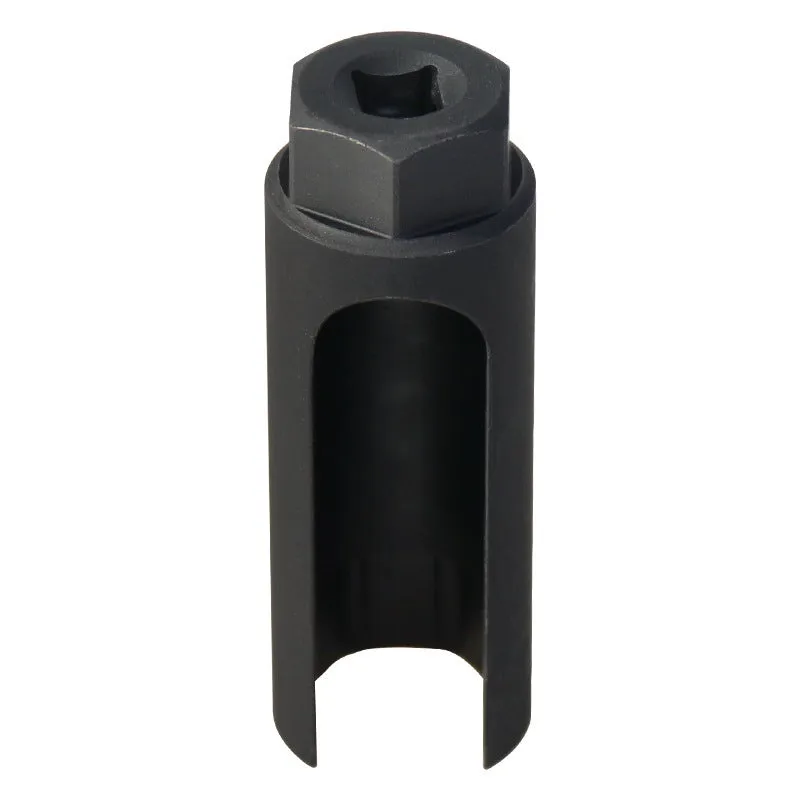
The construction of this tool is centred on practicality and material integrity for its intended mechanical function. Every aspect is derived from its stated specifications to deliver reliable performance where it matters most—on the fastener.
Material and Build
The sleeve is forged from chromium vanadium steel, an alloy commonly used in professional-grade hand tools due to its favourable balance of toughness and resistance to deformation. This material choice directly supports the tool's primary function: to withstand the high torque often required to break free a corroded oxygen sensor nut without cracking or rounding out. The black finish applied to the steel offers a basic layer of protection against rust, which is beneficial given the tool's likely use in the grimy, exposed environment of an undercarriage. The build is a single, solid piece, ensuring all applied force is transferred directly to the nut without loss through joints or connections.
Size and Practical Fit
The tool's sole defining dimension is its 22mm internal socket size. This is not a universal tool; it is engineered specifically for oxygen sensor nuts of this exact measurement, which is a standard size for many vehicle manufacturers. The precision of this fit is crucial. A socket that is even slightly too large can round off the corners of the nut, turning a difficult job into a major repair. Conversely, a perfect 22mm fit maximises surface contact, distributing force evenly and giving the user the best chance of success. The external profile of the sleeve is designed to be used with a standard ratchet or breaker bar, making it compatible with existing tool sets.
Uses and Placement

This tool has a clear and narrow application window, defined by both the component it services and the environment in which it operates. Understanding this context helps users deploy it effectively.
Event or Professional Use
In a professional garage or during a significant repair event like an engine or exhaust system overhaul, this sleeve becomes a valuable time-saver. Mechanics frequently encounter seized oxygen sensors during emissions testing failures, catalytic converter replacements, or general servicing. Having a tool dedicated to this 22mm nut prevents damage to the sensor bung in the exhaust manifold or pipe, which can be costly to repair. It allows for cleaner, quicker removals, improving workshop efficiency and reducing the risk of comebacks or additional work caused by a rounded fastener.
Everyday Home Use
For the home mechanic undertaking their own vehicle maintenance, diagnosing a check engine light related to the oxygen sensor often leads to the need for this tool. Its value lies in its specificity. Instead of struggling with an adjustable wrench or an ill-fitting standard socket, which can slip and cause injury or damage, this sleeve provides a safe, correct-fitting option. It turns a potentially daunting job into a manageable one, empowering owners to replace a faulty sensor themselves, which can restore fuel efficiency and engine performance while avoiding garage labour costs.
Benefits and Buying Value

The value of this product is intrinsically linked to solving a specific, high-friction problem in automotive repair. Its benefits are practical and immediately apparent upon use.
Reuse and Low Maintenance
As a solid steel tool, it is built for repeated use across multiple jobs or vehicles. Unlike consumable parts, its value accrues over time. Maintenance is straightforward: simply wiping it clean after use and storing it in a dry place will preserve its finish and readiness. There are no moving parts to wear out or complex surfaces to degrade. This reusability makes it a sensible long-term addition to a tool collection, paying for itself if it prevents just one instance of a rounded sensor nut that requires drilling or extraction.
Why Choose This Product
Choosing this specific oxygen sensor sleeve comes down to a match between tool and task. Its primary advantage is its exact 22mm specification, eliminating guesswork and poor fit. The chromium vanadium steel construction offers a tangible upgrade in strength and durability over lower-grade steel tools, directly supporting the high-torque demands of the job. For anyone facing a stuck oxygen sensor, this tool represents a direct, purpose-built solution. It provides the confidence that the right equipment is being used for a tricky job, increasing the likelihood of a successful outcome without collateral damage to the vehicle.